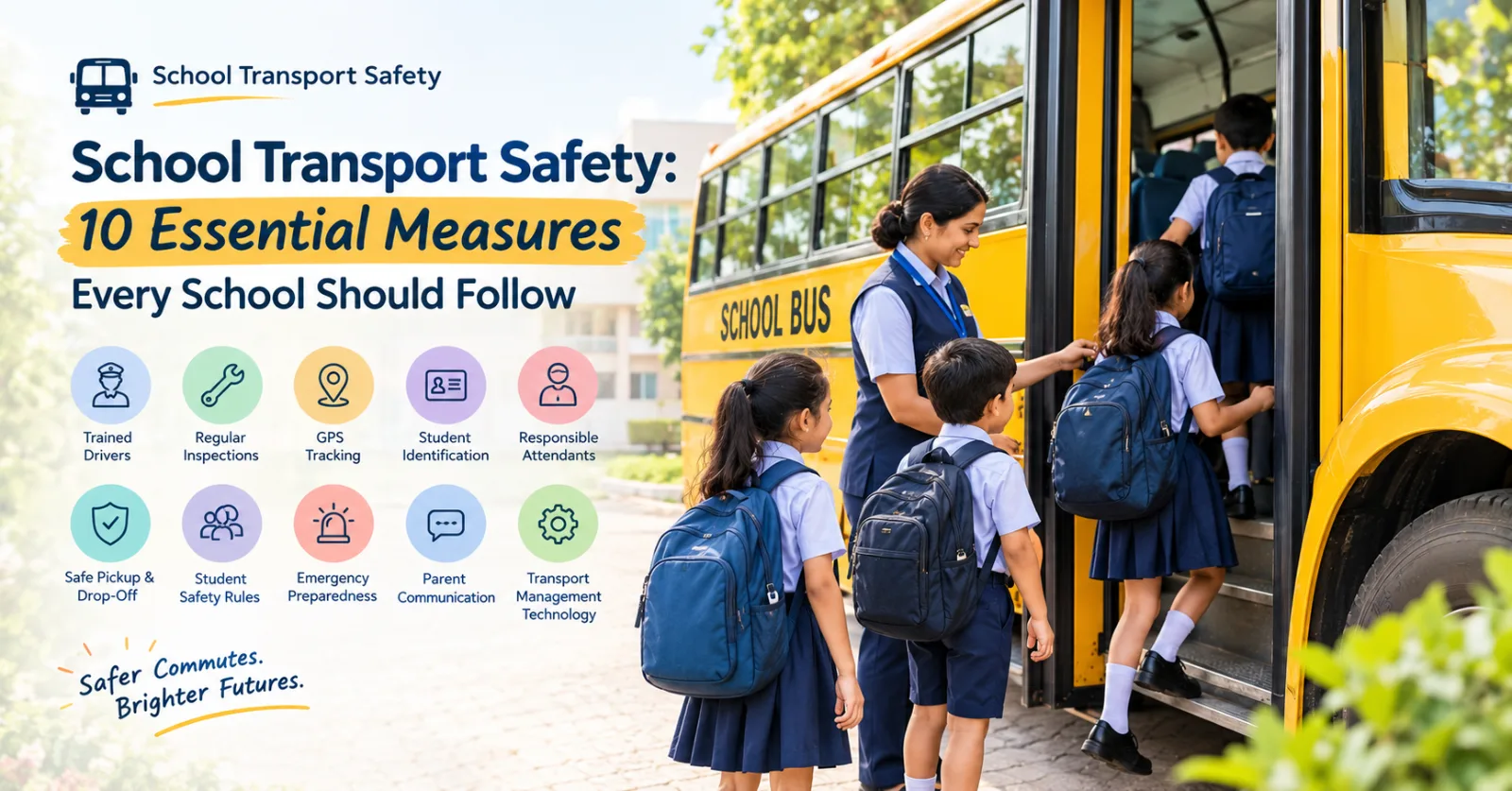
School Bus Safety Checklist for Principals: A Practical Guide for Indian Schools
A practical checklist for the bus, the driver and attendant, every stop and the records your office should keep — written for Indian schools.
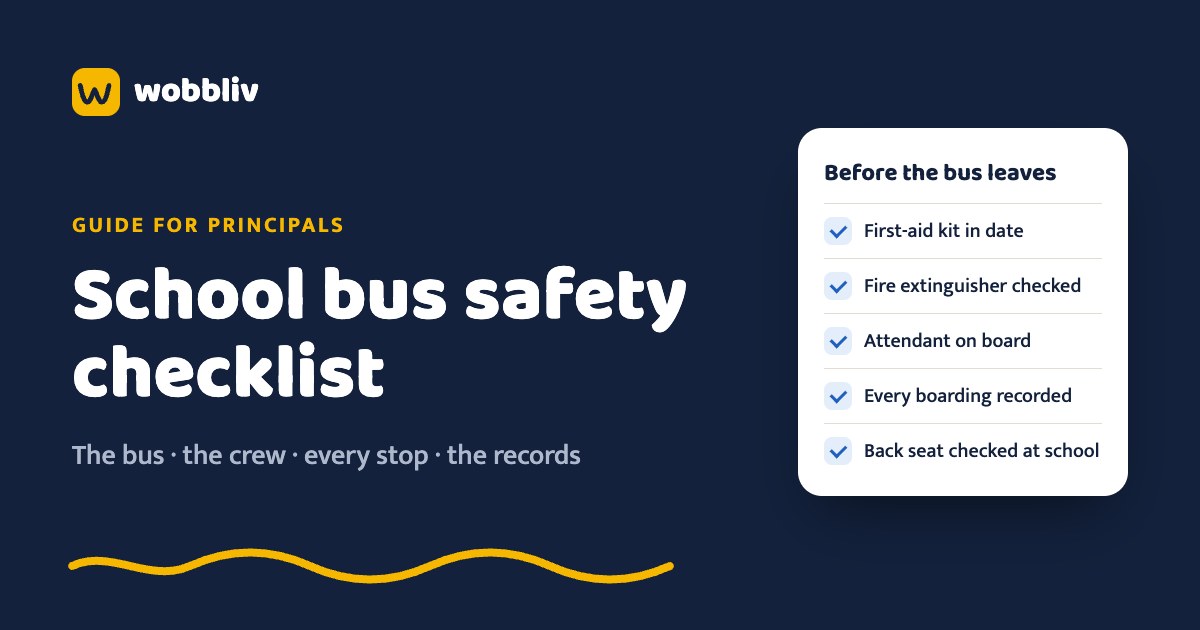
Every principal wants the same thing from the school bus: children picked up on time, brought to school safely and handed back to the right adult in the afternoon. A good school bus safety checklist turns that wish into a routine your transport desk, drivers and attendants follow every single day — not just after something goes wrong.
This guide is written for principals, owners and transport in-charges of Indian schools. It covers the bus itself, the people on it, what should happen at every stop, and the records your office should be able to pull up when a parent asks, “Was my child on the bus this morning?”
Why a written checklist beats good intentions
Most schools already care deeply about transport safety. What usually goes missing is consistency. A new driver joins in July, an attendant is on leave, a vendor swaps a bus at short notice, fog delays every route in December. A written checklist means the standard doesn’t depend on who happens to be on duty.
It also helps you meet the school bus safety guidelines that boards, state transport departments and courts have set out over the years. Requirements differ from state to state and are updated from time to time, so treat the list below as a strong starting point and check it against your state’s current transport rules and your board’s latest circulars.
1. The bus itself
Walk around every bus at the start of each term, and keep copies of its papers in the school office — not only with the vendor.
- Clearly marked as a school bus, with the school’s name and a contact number visible. Hired buses should show that they are on school duty.
- First-aid kit on board, stocked and with nothing past its expiry date.
- Fire extinguisher mounted where the crew can reach it, with a valid refill date.
- Speed governor fitted and working.
- Windows fitted with grills or guards, and doors that close and lock properly.
- Emergency exit marked, unobstructed and tested.
- Valid papers: fitness certificate, permit, insurance and pollution certificate — with expiry dates noted in the office calendar.
- Seats, floor and steps in good repair, with no sharp edges and a first step low enough for the youngest children.
2. The driver and the attendant
The people on the bus matter more than any equipment. Keep a file for each crew member, including vendor staff.
- A valid driving licence for the vehicle class, and solid experience driving heavy vehicles.
- Police verification and identity documents on file for every driver and attendant.
- A clean driving record — no history of drunk or rash driving.
- A regular health and eyesight check.
- An attendant on every trip, morning and afternoon. Many schools and states require a woman attendant where girls travel.
- Training in first aid, using the fire extinguisher, and what to do in a breakdown or emergency.
- The transport desk has every crew member’s phone number, and the crew has the transport desk’s.
3. Every morning, before the bus leaves
A two-minute pre-trip check catches most problems before children are on board.
- Tyres, lights, indicators, wipers and horn working — especially important in fog and monsoon.
- First-aid kit and fire extinguisher in place.
- The route and the list of children expected at each stop on board.
- The crew’s phone charged, and the transport desk told the bus has started.
4. At every stop
This is where most worries begin — for parents and for the school office.
- Record every child who boards, with the time and the stop. A tick in a paper register is better than nothing, but nobody at school can see it until the bus returns.
- If a child expected at a stop isn’t there, the attendant notes it and the parent is told — before the bus is far away.
- In the afternoon, hand each child only to a known adult. Some schools use a simple code that only the parent knows.
- If nobody is at the stop to collect a child, the child stays on the bus. The attendant calls the transport desk, and the child is brought back to school if needed — never left alone at the stop.
5. When the bus reaches school
- The attendant walks to the back seat and checks every row before the bus is parked. A sleeping child is easy to miss.
- The arrival time is recorded, and children are marked as at school.
- Any incident on the way — a delay, a breakdown, a child unwell — is reported to the transport desk the same morning.
6. Records your office should keep
When a parent or your management asks a question, good records turn a stressful conversation into a simple one.
- Daily boarding records for every trip — who boarded, where and when.
- Trip times: when each bus left, reached school and finished the afternoon drop.
- An incident log with what happened and what was done.
- Document expiry dates for every bus and crew member, reviewed every month.
- Parent requests such as leave days and stop changes, with the date they were made.
7. Keeping parents informed
Most “where’s the bus?” calls happen because parents simply don’t know. A few habits cut them sharply:
- Give every parent one clear number for the transport desk, and the times it is answered.
- Tell parents early when a bus is running late, with a reason — traffic, a breakdown, fog.
- Communicate in the language each family is comfortable with. In NCR that usually means Hindi and English.
Fog season and monsoon in NCR
Winter fog and monsoon rain change school mornings across Delhi NCR, Noida and Greater Noida. Before the season starts, check wipers, fog lamps and tyres, agree slower driving times on each route, and decide how parents will hear about delays. A short message that the bus is 15 minutes late saves the office dozens of calls.
How technology helps — without replacing people
A checklist works best when the right information reaches the right person automatically. A plain GPS tracker shows where a bus is, but not who is on it. Boarding records are what parents and principals really ask about.
Wobbliv was built in Greater Noida for exactly this checklist. Children tap an NFC sticker on their bag as they get on and off; parents are told the moment they board, with the time and the stop; and the office sees every bus and every child on one screen. The school is alerted if a child is missed at a stop or taps onto the wrong bus, and a trip can’t be ended while any child is still marked on board. You can see a full school day on Wobbliv or read how we protect children’s data.
Technology should support your crew, not replace their judgement. The attendant’s walk to the back seat still matters every single day.
The one-page version
Print this and keep it at the transport desk:
- Every bus marked, papers valid, first aid and fire extinguisher checked.
- Every driver and attendant verified, trained and reachable.
- A pre-trip check every morning.
- Every boarding recorded; missing children reported straight away.
- Afternoon handover only to a known adult — never leave a child alone at a stop.
- Back seat checked when the bus reaches school.
- Daily records kept and document expiry dates reviewed monthly.
- Parents told early about delays, in their language.
Want to see how this checklist runs on your own routes? Book a 30-minute demo — we’ll map one of your real routes and show what your parents would see tomorrow morning. Or see how Wobbliv works for schools and what it costs.